

HOW CAN INTENOVATE INC. BE AN ASSET TO YOUR BUSINESS


Brand Identity Toolkit: Digital Workbook
Welcome to the comprehensive guide for creating and maintaining a strong, consistent brand identity. This digital workbook will help small business owners, entrepreneurs, and marketing professionals define their brand vision, design key visual elements, craft compelling messaging, and implement branding across various platforms.
Introduction to Branding
Branding is the art and science of shaping how your business is perceived in the marketplace. It goes beyond just a logo or color scheme; it encompasses the entire experience customers have with your company. A strong brand identity helps differentiate your business from competitors, builds trust with your audience, and creates a lasting impression.
At its core, brand identity consists of various elements working together harmoniously. These include visual components like your logo, color palette, and typography, as well as intangible aspects such as your brand voice, values, and the emotions you want to evoke in your customers. When these elements are consistently applied across all touchpoints, they create a cohesive and memorable brand experience.
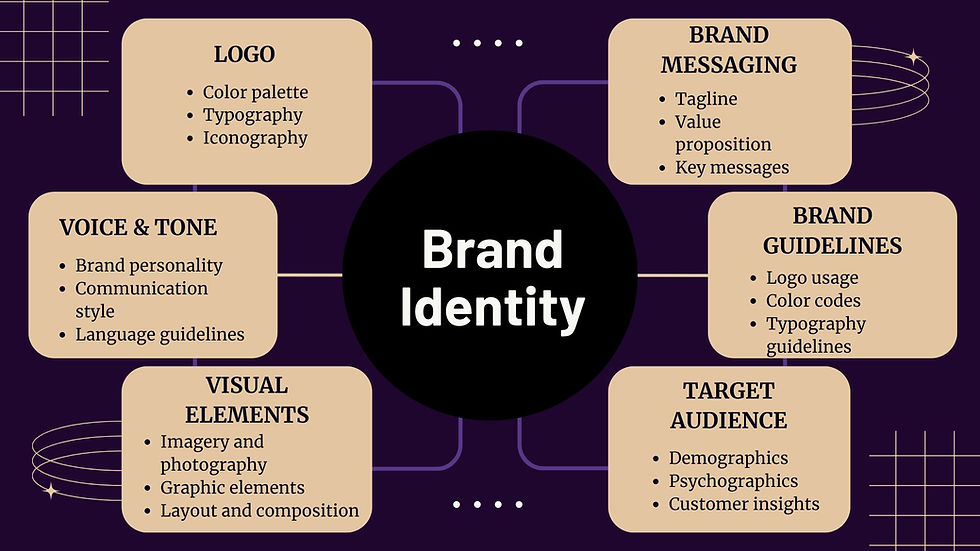
with your brand's personality and values.
the tone and style of your written communications - should align
consistently reflect your brand's aesthetic. Lastly, your brand voice -
Imagery style, whether photography or illustrations, should
typography selection impacts readability and brand personality.
choose can evoke specific emotions and associations, while your
enough to work across various mediums. The color palette you
potential customers. It should be simple, memorable, and versatile
Your logo is often the first point of contact between your brand and
your target audience.
carefully chosen to align with your brand values and resonate with
typography, imagery style, and brand voice. Each element should be
business. The key components include your logo, color palette,
work together to create a unique and recognizable presence for your
Brand elements are the building blocks of your brand identity. They
Understanding Brand Elements
%20(1).png)
A clear brand identity fosters a sense of belonging and pride among employees, leading to increased motivation and productivity.
Employee Pride
4
A strong brand identity can increase the overall value of your business, attracting investors and creating long-term brand equity. Uniform branding portrays a professional image, suggesting that your business is reliable and detail-oriented.
Business Value
3
Consistent branding builds familiarity and trust, making customers more likely to choose your products or services over competitors.
Customer Trust
2
A well-crafted brand identity helps customers easily recognize and remember your business across various platforms and media.
Brand Recognition
1
Importance of Consistent Branding
Consistency is the cornerstone of effective branding. When brand elements are applied uniformly across all customer touchpoints, it creates a cohesive experience that reinforces brand identity. This consistency builds brand recognition, establishes credibility, and fosters trust with your audience.
Consider how global brands like Apple or Coca-Cola maintain their distinct identity across various media and markets. Their consistent use of logos, colors, typography, and messaging ensures instant recognition and connection, regardless of where customers encounter the brand.
Consistent branding streamlines your marketing efforts, making it easier and more cost-effective to create new materials.
Marketing Efficiency
5
Authenticity
Ensure your brand vision and values genuinely reflect your company's beliefs and aspirations. Customers can quickly spot insincerity, which can damage your brand's reputation.
Clarity
Express your vision and values in clear, simple language that resonates with both your employees and customers. Avoid jargon or overly complex statements.
Consistency
Once defined, your vision and values should be consistently applied across all aspects of your business, from marketing materials business, to customer interactions.
Evolution
While your core values should remain relatively stable, be open to refining your vision as your business grows and market conditions change.
Defining Your Brand Vision & Values
Your brand vision is the north star that guides all your branding efforts. It's a clear,
inspiring statement that describes what your brand aspires to achieve in the long
term. This vision should be ambitious yet attainable, serving as a source of motivation
for both your team and your customers. For example, Tesla's vision is "to accelerate
the world's transition to sustainable energy." This concise statement encapsulates
their long-term goals and guides their product development and marketing straregies.
Brand values are the core principles that define your brand's character and shape its
behavior. They influence every aspect of your business, from product development to
customer service. When defining your brand values, consider what your company
stands for beyond making a profit. Are you committed to sustainability? Do you
prioritize innovation? Is exceptional customer service at the heart of everything you
do? Your values should be authentic, actionable, and aligned with your target
audience's expectations.

Brand Voice Development
Define Your Brand Persona
1
Articulate your brand's personality traits, tone, and communication style to establish a consistent and authentic voice.
Craft Compelling Content
3
Develop a library of branded content that brings your voice to life across all marketing touchpoints.
Understand Your Audience
2
Deeply research your target customers to tailor your brand voice for maximum engagement and appeal.
Selecting Brand Colors and Palettes
Color is a powerful tool in brand identity, capable of evoking emotions and
associations instantly. When selecting your brand colors, consider the psychological
impact of different hues. For example, blue often conveys trust and professionalism,
while green might suggest growth or eco-friendliness. Your color choices should align
with your brand personality and resonate with your target audience.
A typical brand color palette consists of primary colors (used most frequently),
secondary colors (for accents and variety), and neutral colors (for backgrounds and
text). Aim for a balance that allows for flexibility in design while maintaining
consistency. Consider how your colors will look in different contexts - both digital and
print. It's also important to define specific color codes (like HEX for digital and
Pantone for print) to ensure consistency across all applications.
Contrast
.png)
Ensure sufficient contrast between colors
for readability and accessibility.
Color Psychology

Research the emotional and cultural
associations of different colors to inform
your choices.
Consistency

Define specific color codes to maintain
uniformity across all brand materials.
Flexibility
.png)
Create a palette that works well in
various applications and mediums.
Descriptive Names
These directly describe what your business does.
Examples:
General Electric, Bank of America.
Pros: Clear and straightforward
Cons: Can be limiting as your business grows
Creating a Memorable Brand Name
A strong brand name is a crucial element of your brand identity. It's often the first thing customers encounter
and can significantly impact their perception of your business. An effective brand name should be
memorable, meaningful, and aligned with your brand vision and values. Consider names that are easy to
pronounce and spell, as this can aid in word-of-mouth marketing and online searchability.
When brainstorming brand names, think about the emotions and associations you want to evoke. You might
draw inspiration from your product's benefits, your company's history, or even mythological references. Be
mindful of cultural implications, especially if you plan to expand globally. It's also crucial to ensure the name
isn't already trademarked or in use by another company in your industry. Once you've shortlisted potential
names, test them with your target audience to gauge their reactions and associations.
Evocative Names
These suggest the essence or experience of your brand.
Examples: Amazon, Apple.
Pros: Memorable and flexible
Cons: May require more marketing to establish brand meaning.
Invented Names
These are completely made-up words.
Examples: Kodak, Google.
Pros: Unique and highly protectable
Cons: May lack immediate meaning or recognition
Designing a Distinctive Logo
Your logo is the visual cornerstone of your brand identity. It serves as a graphical representation of your
company and should be instantly recognizable. A well-designed logo can communicate your brand's
personality, values, and even hint at the products or services you offer. When designing your logo, consider its
versatility - it should look good in various sizes and contexts, from a small social media icon to a large
billboard.
There are several types of logos to consider. Wordmarks (like Google or Coca-Cola) use stylized text of the
company name. Lettermarks (like IBM or HBO) use initials or abbreviations. Symbolic logos (like Apple's apple
or Twitter's bird) use an image to represent the brand. Combination marks blend text and symbols. Whatever
style you choose, ensure it aligns with your brand's personality and industry norms while still standing out
from competitors.

_edited.jpg)

Wordmarks
Lettermarks
Combination logos
Logos, headlines
Unique, attention-grabbing
Display
Logos, special emphasis
Elegant, personal
Script
Headlines, tech brands
Modern, clean
Sans-serif
Body text, formal brands
Traditional, authoritative
Best Used For
Characteristics
or easily embeddable to ensure consistency across digital platforms.
options (light, regular, bold, italic) provides flexibility in design. Remember to choose fonts that are web-safe
sparingly for readability. Also, pay attention to font weights and styles within a family - having a range of
sans-serif fonts can appear more modern and clean. Script fonts can add elegance but should be used
Consider the emotional qualities of different font styles. Serif fonts often convey tradition and reliability, while
combination of fonts - for example, a bold sans-serif for headings and a more readable serif for body text.
versatile enough to work across various applications, from headlines to body text. Many brands use a
selecting fonts for your brand, consider both functionality and personality. Your primary font should be
Typography plays a crucial role in brand identity, affecting readability, tone, and overall visual appeal. When
Choosing Appropriate Fonts and Typography
Font Type
Serif


ELEVATE & GROW YOUR BUSINESS TODAY
Comprehensive Digital Expertise: Intenovate Inc has deep, cross-functional expertise spanning all critical aspects of digital transformation, including strategy development, technology implementation, and organizational change management.
Customized Solutions: Intenovate Inc takes a collaborative, client-centric approach to co-create tailored strategies and roadmaps that align with our unique business objectives, challenges, and constraints.
Seamless Execution: Intenovate Inc handles the complex implementation, seamlessly integrating new technologies, processes, and ways of working while navigating organizational change.
Sustainable Growth Strategies: With Intenovate Inc. by your side, you can confidently scale your business on a strong financial foundation, positioning your venture for long-term success.
Continued Optimization & Support: Intenovate Inc. provides ongoing monitoring, optimization, and guidance to ensure our strategic transformation efforts deliver sustained value over time.
Let Intenovate Inc. guide you through the complexities of starting and growing your business.

ELEVATE & GROW YOUR BUSINESS TODAY
Comprehensive Digital Expertise: Intenovate Inc has deep, cross-functional expertise spanning all critical aspects of digital transformation, including strategy development, technology implementation, and organizational change management.
Customized Solutions: Intenovate Inc takes a collaborative, client-centric approach to co-create tailored strategies and roadmaps that align with our unique business objectives, challenges, and constraints.
Seamless Execution: Intenovate Inc handles the complex implementation, seamlessly integrating new technologies, processes, and ways of working while navigating organizational change.
Sustainable Growth Strategies: With Intenovate Inc. by your side, you can confidently scale your business on a strong financial foundation, positioning your venture for long-term success.
Continued Optimization & Support: Intenovate Inc. provides ongoing monitoring, optimization, and guidance to ensure our strategic transformation efforts deliver sustained value over time.
Let Intenovate Inc. guide you through the complexities of starting and growing your business.